
If your dream trip to Jamaica falls somewhere between June and November, the words “hurricane season” have probably crossed your mind. It’s a fair thing to wonder about, and the answer is both reassuring and sobering: most days in those months are warm, green and lovely, but big storms are real, and a little planning goes a long way. Here’s what’s actually worth knowing.
When Is Hurricane Season, Really?
The Atlantic hurricane season, which includes the Caribbean, officially runs from June 1 to November 30. Those dates cover the stretch of the year when the ocean is warm enough to feed tropical storms, but the risk isn’t spread evenly across all six months.
Early summer tends to be fairly quiet. Activity usually builds through August, and the busiest stretch runs from roughly mid-August to mid-October, with the long-term peak falling around September 10. By November, things are usually winding down again, though storms can still form late in the season. By December the season is over, and the island settles into its drier months just in time for Christmas traditions like sorrel and Grand Market.
It also helps to remember how big the Atlantic is. In a typical season, most storms never come near Jamaica at all. Plenty of travelers visit in September and October and never see more than a heavy afternoon shower. If you’re still choosing your dates, our month-by-month guide to Jamaica’s seasons lays out how each part of the year feels.
Storms That Shaped the Island
Jamaicans don’t take hurricanes lightly, and for good reason. Hurricane Gilbert in September 1988 crossed the entire length of the island and is still the storm many older Jamaicans measure others against. Ivan in 2004 and Dean in 2007 also left their mark.
Then came Hurricane Melissa. On October 28, 2025, it made landfall near New Hope in Westmoreland as a Category 5 storm, the strongest hurricane ever recorded to hit Jamaica. The western end of the island took the worst of it, including Westmoreland, St. Elizabeth and Trelawny, and homes, roads, farms and historic towns were badly damaged. Recovery has continued since, and many attractions and businesses have reopened, but some places are still rebuilding.
That history is part of why people here are so practiced at preparing. When a storm threatens, you’ll see neighbors checking on each other, shops stocking water and batteries, and radio and TV giving regular updates. If you’re curious about how the north coast grew into the place it is today, our short history of Ocho Rios fills in more of the story.
What Hurricane Season Feels Like Day to Day
For most visitors, hurricane season simply means the island’s wetter, quieter months. Showers often roll in during the afternoon, pour hard for a while and then clear, leaving the hills a deep, glossy green. The air is hot and humid, the sea is warm, and beaches and attractions tend to be less crowded than in the busy winter months.
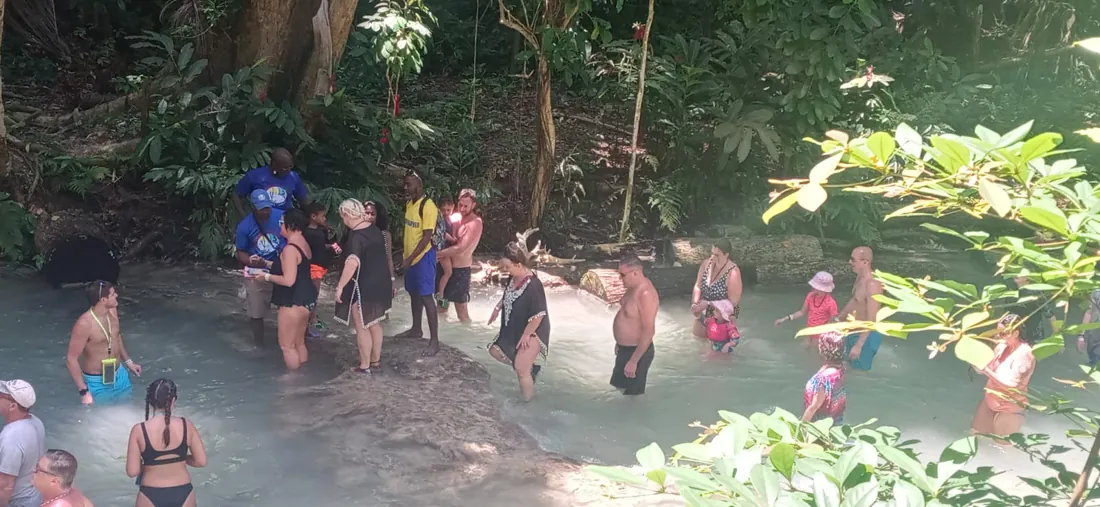
Rain does change some plans. River trips and waterfall climbs can be paused when the water runs high and fast after heavy rain, and country roads can be slow when gullies fill. A flexible attitude helps: keep a morning activity in your back pocket for the day the afternoon looks stormy, and save your beach time for the bright, clear hours. Our guide to Dunn’s River Falls explains why the climb depends so much on the river’s mood.
How Forecasts and Warnings Work
One comforting thing about hurricanes is that they rarely arrive as a surprise. The US National Hurricane Center tracks storms across the Atlantic and Caribbean and publishes forecasts several days ahead, and the Meteorological Service of Jamaica issues local alerts. Jamaica’s Office of Disaster Preparedness and Emergency Management (ODPEM) coordinates the island’s response and shares public safety guidance.
Two terms are worth knowing:
- Hurricane watch: hurricane conditions are possible in the area, usually issued about 48 hours before tropical-storm-force winds are expected.
- Hurricane warning: hurricane conditions are expected, usually issued about 36 hours ahead. This is the signal to follow your hotel’s instructions and any official advice.
When a storm is approaching, airlines often offer waivers to change flights, and cruise lines regularly reroute ships around bad weather, so a cruise port day may be swapped for another island. Large hotels and resorts generally have storm procedures and will tell guests what to do.
A Simple Plan for Peace of Mind
You don’t need to cancel a fall trip to Jamaica out of worry. You just need a few sensible habits:
- Watch the tropics in the week before you fly. The National Hurricane Center’s website shows any storms and where they’re likely to head.
- Know your booking terms. Check how your airline, hotel and any prepaid plans handle weather changes.
- Pack for rain. A light rain jacket, a dry bag for your phone and shoes that can get wet make showery days easy.
- Stay out of rivers and gullies after heavy rain. Water can rise quickly, even when the sun comes back out.
- Listen to local advice. If your hotel, driver or guide says it’s not a day for the river or the sea, trust them.
- Be kind to places that are rebuilding. In areas still recovering from Melissa, patience and spending at small local businesses mean a lot.
Handled this way, hurricane season becomes what it is for most visitors: a lush, unhurried time to enjoy the island. For more everyday know-how, see our list of things worth knowing before you land.
Tell us your dates and where you’re staying, and we’ll help you plan an irie day. Email Rocky whenever you’re ready.